
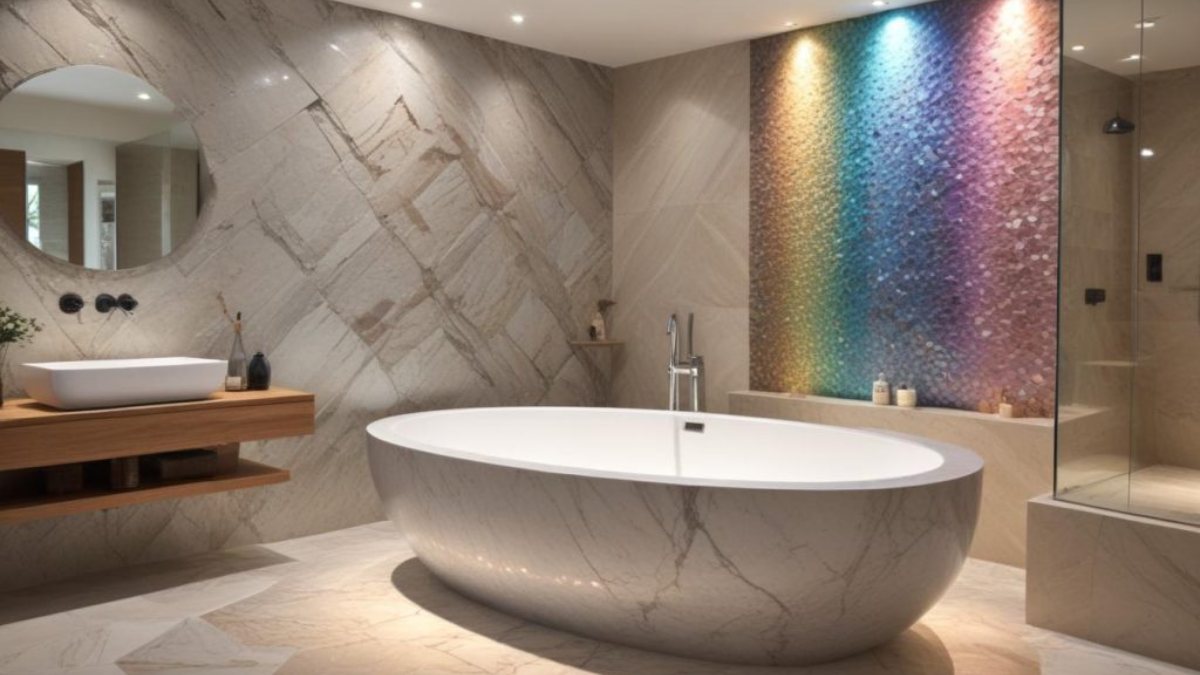

When you selecting natural stone for wet areas in Oman, you are challenging the material with the toughest environmental test: constant moisture, temperature shifts, and humidity. True longevity in spaces such as luxury bathrooms or pool surrounds means choosing materials that are engineered for survival. We guide this selection process, ensuring beauty and durability. You can explore our premium materials on products page. We understand it is important to get this decision just right, particularly when managing projects in Muscat’s climate.
Q: How does Granite withstand constant moisture better than other stones?
Granite’s superpower lies in its incredibly dense structure. As a stone formed by daily activity, it’s highly crystalline and far less porous than marble or travertine. This natural density is what makes it a practical, top-tier solution for floors, shower walls, and vanity tops that see saturation daily. Its resistance to absorption is a game changer when we talk about preventing mold and mildew a common headache in humid environments.
Determine Natural Stone for Wet Areas:
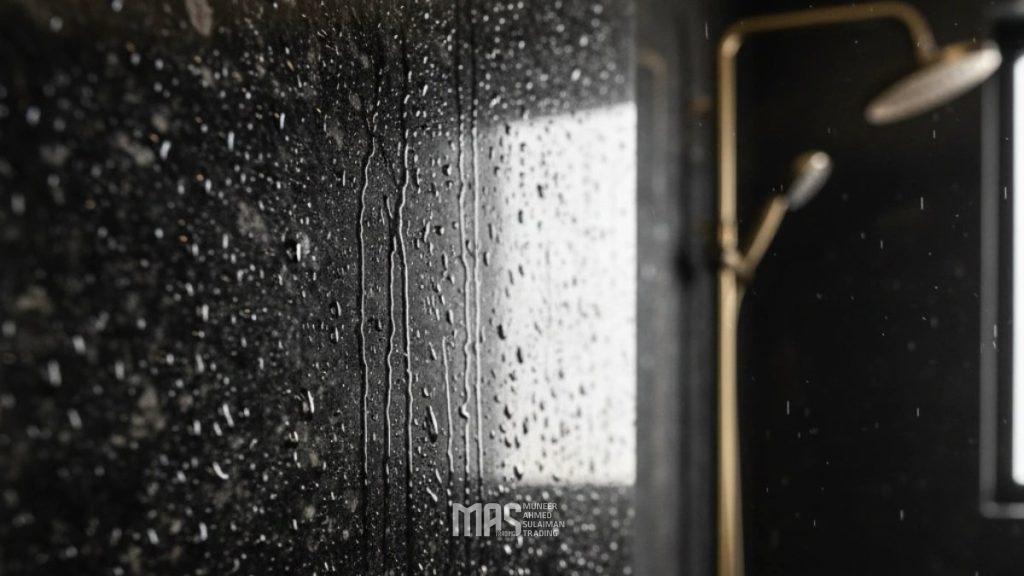
When specifying Granite, consider using Black Jasper series. Its dark complexity maintains its sheen beautifully in damp environments, creating a stunning visual contrast.
Q: Is Marble truly suitable for wet area floors, and if so, which finish is best?
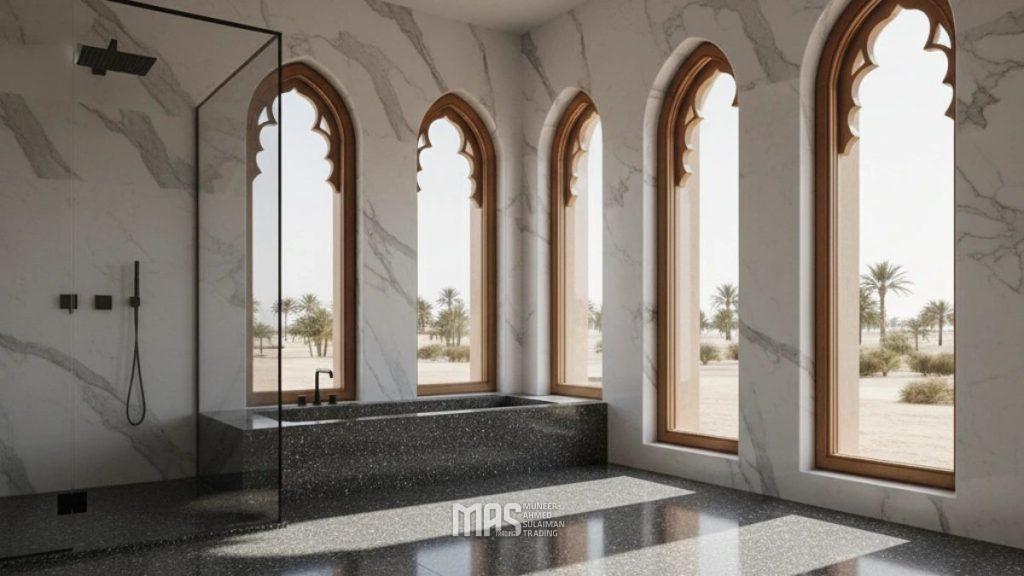
Marble, without question, offers unmatched opulence, but its use requires surgical precision. On floors, a honed or matte finish is strongly recommended to increase surface friction, crucial for preventing slipping. Polished marble is generally reserved for shower walls only. The key to successful marble use is sealing, which forms a protective barrier against water penetration and staining.
Tone Insight:
For a refined, yet safer, choice, consider the clean white tones of Venatino marble. Its subtle veining adds character without being overly busy.
Q: Given Travertine’s natural porosity, what application rules should we follow in high-moisture zones?
Travertine’s distinctive pitted surface and warm tones are certainly alluring, but its natural porosity makes it the most absorbent of the three. For this reason, we advise using Travertine primarily for wall cladding and areas where direct, standing water is minimal. If using it on floors, only a high quality, filler treated and heavily sealed Travertine should be considered. Regular sealing is non-negotiable, it’s the only way to safeguard its earthy charm.
Usage Areas
Nepal travertine offers a beautiful, unique texture that can even anchor your outdoor area. Ensure your installer follows best practices for Porcelain installation in muscat to maintain water barriers in the surrounding areas.
Essential Maintenance for Longevity
The right material is only half the battle. Protecting that investment requires ongoing discipline.
- Clean Regularly: Always use pH-neutral cleaners specifically formulated for natural stone. Anything acidic (like vinegar or many common household cleaners) will etch the stone surface, especially marble and travertine.
- Seal Diligently: Resealing frequency depends on the stone type and traffic, but regular sealing protects against deep moisture penetration and staining, keeping stones like our bright TERRA BIANCA looking pristine.
- Wipe Spills Immediately: Natural stone is not chemically immune. Wipe up oils, soaps, and colored liquids before they have time to set.
Choosing natural stone for wet areas is a critical decision that balances aesthetics with technical durability. Stop relying on internet generalities. You need to see and feel the density of these stones firsthand.
Visit our showroom in Muscat to physically explore our wide selection of Granite, Marble, and Travertine. MAS.Trading experts are here to guide you through the selection process, providing personalized recommendations based on your specific needs and the challenging demands of the Omani climate.